


The Past Within
Rusty Lake
I went into The Past Within expecting a short adventure to play with another person, and that is exactly where its appeal begins. Rusty Lake has built a game around cooperation rather than simply adding a multiplayer option to a traditional puzzle title. One player explores the past while the other works in the future, and progress depends on both people paying close attention and communicating clearly. That structure makes even small discoveries feel shared.
It is a paid adventure game from Rusty Lake, priced at $2.99, with a Teen content rating. The game released on November 2, 2022, and it remains an unusually focused choice for two friends who want something they can finish together instead of another endlessly expanding mobile game. Its average rating is 4.8 from around 49 thousand ratings, while the store page shows over 100 thousand installs. Those figures suggest that the unusual co-op format has found a committed audience.
Why the first week feels so effective
The strongest part of my first session was how quickly the game gave both players a job. You are not sitting beside someone who occasionally offers a hint while one person does all the work. Each player has information the other needs, and the game turns conversation into the main tool for solving problems. That makes the opening feel active even when the controls themselves are simple.
The two timelines create a useful kind of asymmetry. I might be looking at an object, symbol, or sequence that means very little to me, while the other player has the context needed to understand it. Instead of searching the same screen together, we compare what we see and gradually build a shared picture. The real puzzle is often communication before it is deduction.
This is especially enjoyable with a friend who likes discussing possibilities out loud. One person can describe a room while the other checks a different scene, then both players test whether their observations connect. The best moments are not always the final answers; they are the sudden realization that two apparently unrelated details were designed to be compared.
Related News






The presentation also helps the game stand apart from brighter, busier mobile adventures. Rusty Lake uses a strange, uneasy atmosphere, with unsettling imagery and a deliberately unusual tone. It is not a comfortable family game, and the Teen rating is worth taking seriously if you are choosing something for younger players. I found the mood more intriguing than frightening, but people who dislike surreal or disturbing scenes may feel uncomfortable before the puzzles have a chance to win them over.
A practical point matters immediately: both players need access to the game. This is not a title where one person buys it and invites a friend who does not own it. That extra step is reasonable for a paid co-op experience, but it changes the kind of spontaneous activity this can be. It works best when you arrange a session with someone who is already interested, rather than hoping to find a random partner at the last minute.
For a realistic everyday scenario, imagine two friends who live in different cities and want something more engaging than watching the same show. A voice call and the game can fill an evening without requiring either person to learn complicated controls. One player can hold the phone while talking through clues, or both can use separate devices and keep a call open. The experience rewards patience, so it is better suited to a planned session than to a few distracted minutes on public transport.
Gallery
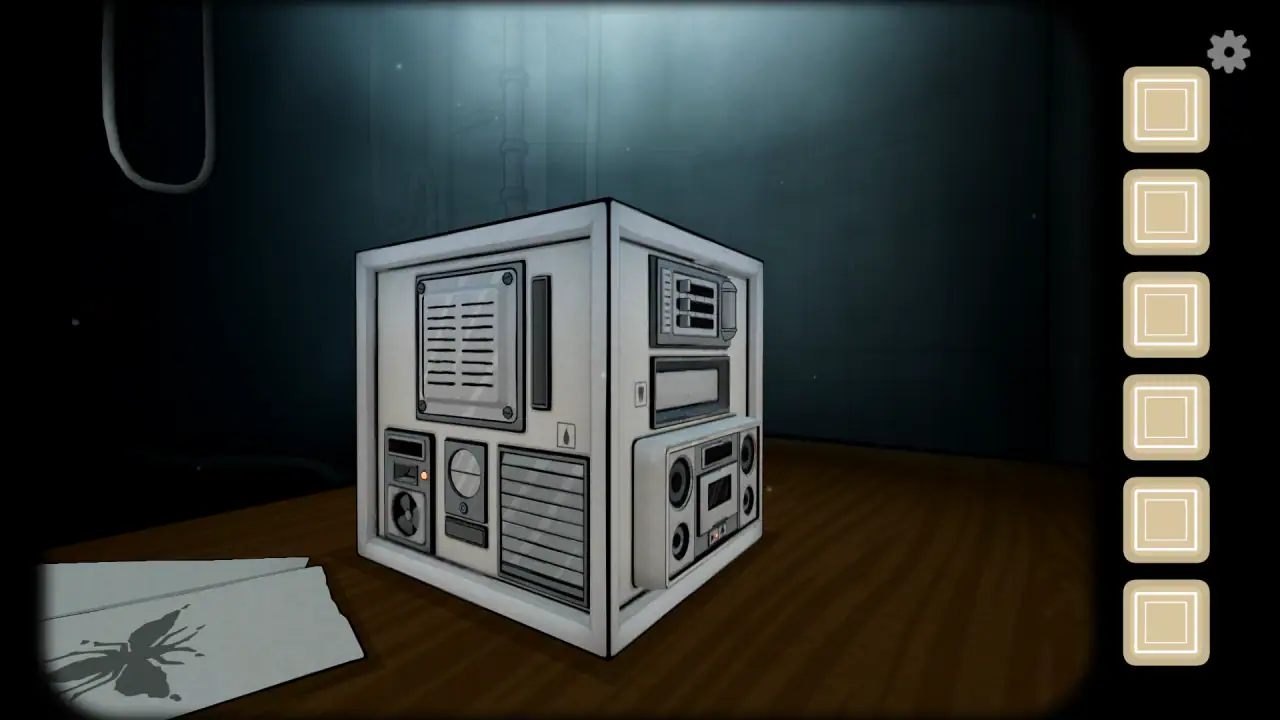
One of my favorite practical habits is to agree on a vocabulary before starting. If one player calls an object “the red box” and the other calls it “the cabinet,” confusion can build quickly when several items look similar. Describing location, shape, color, and nearby details makes the exchange much smoother. This sounds basic, but in a game built around separated information, precise language is a genuine advantage.
Learning to solve together instead of taking turns
Many mobile puzzle games let two people cooperate by handing the phone back and forth. That can be fun, but it is still essentially a solo game with an audience. Here, taking turns controlling the same screen would miss the point. The design is more rewarding when each person keeps ownership of their side and reports findings rather than grabbing control from the other player.
That arrangement can also reveal differences in problem-solving style. One person may inspect every detail, while the other notices patterns quickly. One may enjoy trying combinations, while the other prefers writing down symbols. I found that the game becomes less frustrating when both players accept that these roles can change from puzzle to puzzle.
There is a small social risk, though. A confident player can dominate the conversation and turn the other into an assistant. If that happens, the co-op design loses much of its value. I recommend saying observations before proposing solutions and allowing the other person time to inspect their own side. The game is more satisfying when the answer feels jointly earned.
What remains after the novelty fades
The first session benefits from surprise. It is novel to discover that your friend is seeing a different version of the situation, and the early exchanges naturally produce excitement. The more important question is whether the game has a reason to remain installed once that novelty disappears.
For me, the answer is conditional. It is not a daily game, and it does not try to be one. There is no reason to open it every morning, collect resources, or build a long-term routine around it. Its recurring value comes from being a compact activity you can recommend to a particular person: a friend who enjoys puzzles, a partner who likes eerie stories, or a relative who wants a cooperative challenge without competitive pressure.
That makes it closer to a digital appointment than a permanent hobby. You install it when you have someone to play with, complete the experience, and remember it as a shared event. I consider that a strength rather than a weakness, because many mobile games demand regular attention long after their best ideas have been exhausted. This one is more honest about being a finite adventure.
Still, its replay value is limited by the fact that discovery is central to the experience. Once both players know the solutions and understand how the timelines connect, a second run will not recreate the same uncertainty. You may revisit it with another friend, but that is more like introducing someone to the game than finding a fresh campaign for yourself.
This is where it differs from the usual alternatives in the adventure category. A large open-world adventure can offer exploration for weeks, while a standard single-player puzzle game is easier to enjoy whenever you have a spare moment. The Past Within offers neither of those forms of continuity. Its advantage is the quality of focused cooperation, not quantity of content or an endless stream of new challenges.
The maintenance burden is low, but the social setup matters
From a device perspective, the game is relatively easy to keep available. The current version is 7.9.1.1 and it supports Android 6.0 or later, so it is not limited to only the newest phones. I would still check that both players can run it before planning a session, particularly if one person uses an older device. The important maintenance is less about storage or daily updates and more about keeping the partnership workable.
You need a reliable way to talk. The game’s separated viewpoints make silent play awkward unless both people are physically together and can communicate easily. A voice call is usually the simplest solution for remote play, but background noise, weak audio, or one person repeatedly stepping away can make clues harder to exchange. If you want a relaxed experience, choose a quiet time and avoid treating the session as something to squeeze between other tasks.
It also helps to keep a note nearby. I found that writing down symbols, sequences, and descriptions reduced the number of times we had to repeat information. This is not about turning the game into homework; it simply prevents a useful observation from disappearing while the other player is examining something else. A shared note can be particularly useful when both people are playing remotely.
The game does not demand a permanent commitment, which is part of its charm. There is no maintenance loop to manage and no pressure to return on a schedule. However, that also means it will not reward someone looking for a regular mobile habit. If your ideal game is something you can play alone for five minutes, improve a character, and return to later without arranging anything, this is probably the wrong fit.
Where fatigue can set in
The biggest source of fatigue is communication overload. When both players describe everything at once, the conversation can become a stream of disconnected details. The solution is to slow down and use a consistent order: identify the room, describe the object, mention its position, then explain what interaction is possible. This simple discipline keeps the co-op structure from becoming verbal clutter.
Another limitation is that the game assumes both players want to engage with puzzles at roughly the same pace. If one person wants to experiment while the other wants to inspect every clue first, impatience can replace curiosity. The title is not designed around a relaxed spectator role, so a mismatch in enthusiasm is more noticeable than it would be in a conventional adventure.
The unusual atmosphere may also narrow its audience. Rusty Lake’s style is memorable, but memorable does not always mean welcoming. Players who prefer cheerful art, straightforward storytelling, or realistic settings may find the tone distracting. I would not choose it for a casual group that has not agreed on eerie material, even though the main attraction is cooperation.
There can be a different kind of fatigue when players expect a broad adventure and receive a concentrated puzzle experience. The price is modest, but value is still personal. Someone who wants a long campaign with exploration, combat, upgrades, or a large cast may finish and feel that the experience was too contained. That is not a design failure; it is a mismatch between the game’s purpose and the player’s expectations.
I also would not recommend it as the first choice for children simply because it is on a phone. The Teen rating, unsettling imagery, and need for careful verbal cooperation make it better for older players who can appreciate the atmosphere and discuss what they are seeing. For younger users, a gentler cooperative puzzle game may be more appropriate.
Who should keep it installed?
I think it earns lasting space on a device when you have a specific person to play with. Couples can use it as a short shared activity, friends can make it part of a remote hangout, and puzzle fans can enjoy comparing their observations instead of competing for the fastest answer. It is also a good choice for players who usually avoid multiplayer because they dislike rankings or pressure. The game’s cooperation is intimate and conversational rather than competitive.
It is less suitable for people who play almost exclusively alone. Although the setting and puzzles may appeal to you, the central design loses its force without another person. You might enjoy watching someone else play, but that is not the same as experiencing the intended exchange of information.
I would also skip it if you need frequent replayability. A roguelike adventure, a large exploration game, or a puzzle app with rotating challenges will give you more reasons to return month after month. This title is better understood as a carefully planned shared outing. Its value is concentrated, not continuous.
Before buying, I would settle three practical questions with your intended partner: can both of you run the game, can you communicate comfortably, and do you both enjoy strange or unsettling adventure themes? Answering those questions prevents most disappointment. The low price makes experimentation easier, but the co-op requirement means a purchase still works best when it is coordinated.
My long-term verdict
After the initial surprise wears off, I still see a clear reason to recommend The Past Within. It does not need a daily reward system or a large content pipeline because its strongest feature is the relationship it creates between two players during a focused session. I remember the conversations and the process of connecting clues more than I remember individual taps, which is a good sign for a cooperative game.
Its lasting value is therefore selective. I would keep it available for the right friend, not because I expect to play it every week. The lack of an ongoing routine may disappoint players who measure value by replay hours, while players who value memorable one-off experiences may find the compact format refreshing.
Rusty Lake has made an adventure that asks players to listen, explain, and trust each other’s observations. That is more demanding than passing a phone back and forth, but it is also why the experience feels personal. If you want a short, unusual co-op adventure that turns conversation into the main mechanic, this is an easy recommendation.
My final advice is to treat it as a planned shared experience rather than a conventional mobile pastime. Invite someone who enjoys puzzles, use a voice call or sit together, keep notes when the clues become dense, and give both players room to investigate. If that sounds appealing, the $2.99 purchase is justified by the quality of the collaboration. If you want endless content, instant solo play, or a comfortable everyday habit, choose a different adventure instead.
FAQs for The Past Within
What is The Past Within about?
The Past Within is a cooperative time-travel puzzle adventure from Rusty Lake. Two players must work together while occupying different timelines: one player explores the past and the other investigates the future. Each person sees different locations, clues, and mechanisms, so progress depends on communicating observations clearly and combining information rather than solving everything alone.
Can I play The Past Within alone?
The game is designed primarily for two players and does not offer a conventional single-player experience where one person controls both sides. You need a partner using a separate device, with both players owning and installing the game. Although you can technically communicate through voice or text chat, playing with someone available to discuss clues makes the experience considerably smoother and more enjoyable.
Do both players need to buy The Past Within?
Yes, both participants generally need their own copy of The Past Within on a compatible device. The game is built around two separate players viewing different parts of the story, so one purchase is not intended to provide access for both people on separate devices. Before downloading, check that both devices use supported versions and that each player can install the game.
Does The Past Within support cross-platform play?
The Past Within supports cooperative play between players using compatible versions on different platforms, but availability can depend on the specific Android, iOS, PC, or other edition being used. The game does not require both players to be on the same type of device in every situation. It is best to confirm the current store listing and version requirements before purchasing.
Is The Past Within suitable for players who dislike horror games?
The Past Within is more mysterious and unsettling than intensely frightening. It contains Rusty Lake’s characteristic dark atmosphere, strange imagery, disturbing themes, and occasional macabre moments, but it is primarily a story-driven puzzle game rather than an action horror title. Players who are comfortable with eerie visuals and surreal storytelling will likely find the mood intriguing rather than overwhelming.
Pros
- Innovative two-player puzzle design encourages constant communication.
- Atmospheric visuals and sound create a memorable
- unsettling experience.
- Puzzles are varied and generally reward careful observation.
- Each player sees different clues
- making both roles feel important.
- Short playtime makes it easy to complete in a few focused sessions.
Cons
- Requires two copies and two players; there is no solo mode.
- Both players need a reliable voice or text communication method.
- Some solutions can feel unclear without precise coordination.
- Replay value is limited once both perspectives have been completed.
- The dark
- disturbing themes may not suit younger or sensitive players.


